JEV AI,
THE DEVELOPER INDEX
SEE WHAT DEVELOPERS BUILD WITH JEV AI — A NEW AI MODEL THAT RETURNS TYPED DECISIONS INSTEAD OF TEXT.
WHAT THIS JEV AI INDEX IS
Jev was released on 15 September 2026 and the first thing that happened was not a wave of think-pieces. It was a wave of demos. Within four days, 181 developers had posted 202 public videos of Jev doing something concrete — playing Super Mario from raw emulator state, driving a browser agent through a flight search in seven seconds, breaking down 724 live ads in forty seconds, classifying a thousand research papers for eight cents.
This Jev AI index collects those, and it keeps collecting the open-source projects that came after them. It exists because Jev AI is unusually hard to understand from prose. Every description of Jev has to start by explaining what Jev does not do, and a paragraph about a model that returns typed decisions instead of text is considerably less convincing than forty seconds of watching one work.
Everything here is other people's work, credited and linked to the original. What we add is the collection, the classification, and an honest reading of the numbers — including the ones TypeSafe's own marketing does not lead with.
WHAT IS JEV AI, IN ONE PARAGRAPH
Jev AI is the community shorthand for Jev, a model from TypeSafe AI that does not write. You give Jev program state and a question whose possible answers you fixed in advance, and Jev returns one of those answers with a calibrated probability, typically in 70 to 500 milliseconds, at $0.042 per million input tokens with output free. There are exactly three question types — Choice, Score and Noul — and Jev answers all the questions in a request at once rather than one token at a time.
That constraint is the whole product. Because Jev cannot write, it cannot produce malformed JSON, cannot invent an enum member, and cannot need a parser. Because Jev does not generate tokens, it does not pay the latency or the cost of generating them. And because TypeSafe trained it specifically for calibration, the confidence number attached to each Jev answer is something your code can put a real threshold on.
HOW TO USE THIS JEV AI INDEX
Browse the cases
The wall above holds every public Jev demo we could find, sorted by a hot score that weighs views, likes, saves and reposts against a 72-hour half-life. Filter by theme to find the ones closest to your own problem — games, browser agents, routing, code review, trading, robotics.
Read the projects
Beyond the demos there are open-source Jev projects you can actually install and read: SDK wrappers, MCP servers, agent harnesses, evaluation scaffolds. The index marks which ones are code and which are write-ups, because the community list mixes both.
Copy the patterns
Eleven Jev decision patterns, each with the state, the typed questions and the routing policy written out. These are the shapes that keep recurring: triage with speculative fan-out, model cascades, confidence-gated actions, LLM guardrails, RAG filtering, citation verification.
Check the numbers
The comparison page carries TypeSafe's own benchmark with the accuracy column intact, a cost calculator you can move, and a plain statement of where Jev loses. We would rather you trust the site than the pitch.
WHAT THIS JEV AI INDEX WILL NOT TELL YOU
Jev AI is not the most accurate model available. On TypeSafe's own 711-case benchmark Jev scores 67.8%, which ties GPT-5.6 Terra and trails GPT-5.6 Sol and Opus 5 by five to six points. The famous figures — 193.6 times faster, 444.6 times cheaper — come from one recorded Doom demo, not from that suite.
Jev cannot hallucinate in the narrow sense that it cannot return an option you did not supply. It can absolutely pick the wrong one at high confidence, and it will give you no reason when it does. There is no independent evaluation of Jev, no public weights, and the accuracy figure measures agreement with a model-generated reference rather than objective correctness.
And Jev cannot write. Not a reply, not a summary, not a tool argument. Any workflow with a written output still needs a text model, and most of the good Jev integrations in this index run both.
WHAT DEVELOPERS ACTUALLY POINT JEV AI AT
The demos are not evenly spread, and the distribution is itself informative. The largest cluster is browser and agent automation, where Jev decides the next action and an ordinary model only gets called when text has to be typed. Browser Use's ultrafast agent completed a Google Flights search in about seven seconds this way, which is the kind of number that changes what you are willing to put in a request path.
The second cluster is games, and it is bigger than you would expect for a model with no vision. That is the point: these agents do not look at pixels, they read structured emulator state and ask Jev which action to take. Super Mario, Celeste, Subway Surfers, chess, a browser FPS, a Doom agent deciding floor-or-button-or-ignore for every tile on screen. Games are where the latency is most visible, so they became the field test.
Then come the unglamorous ones that are probably where the money is. Code review gating, where Jev flags the risky diffs before an expensive model reads them. Context compaction for coding agents, where Jev judges which tool output is still relevant and prunes the rest verbatim. Document classification at eight cents for a thousand papers. Lead scoring, invoice extraction, content moderation, RAG passage filtering, citation verification.
And a long tail of things nobody predicted: a drone controller where Jev handles the high-level judgement while the flight controller keeps stability, a knowledge-graph walker that asks Jev which edge to follow next, a trading bot on a Monad testnet deciding buy or sell at 81 milliseconds a decision.
HOW PEOPLE GET JEV AI
The Jev AI API from TypeSafe opened to everyone on 20 September 2026. The waitlist that gated the first five days is gone — roughly 140,000 people had been cleared through it in the 36 hours after launch, and demand made the queue untenable in under a week. A new console.typesafe.ai account now starts with $5 of credit, about 120 million input tokens at the published rate. Several gateways carry Jev at that same price if you would rather not open another account: Vercel's AI Gateway exposes it as typesafe-ai/jev through the AI SDK's experimental evaluate path, and Cloudflare Workers AI and OpenRouter both serve it as well.
On the client side the official SDKs are typesafe-sdk for Python and @typesafe-ai/sdk for JavaScript. LangChain ships langchain-typesafe with a TypeSafeClassifier, Pydantic AI has native Jev support, and there are now several MCP servers that expose Jev judgements as tools to Claude Code, Codex and other coding agents.
Past that opening credit, none of the routes have a free tier. Every Jev call is billed like the last, which at $0.042 per million input tokens is a rounding error for anything short of production volume.
THE MOST-WATCHED JEV AI DEMOS
The lead video plays here. Everything below it links through to the case, the original post, and the author who made it.
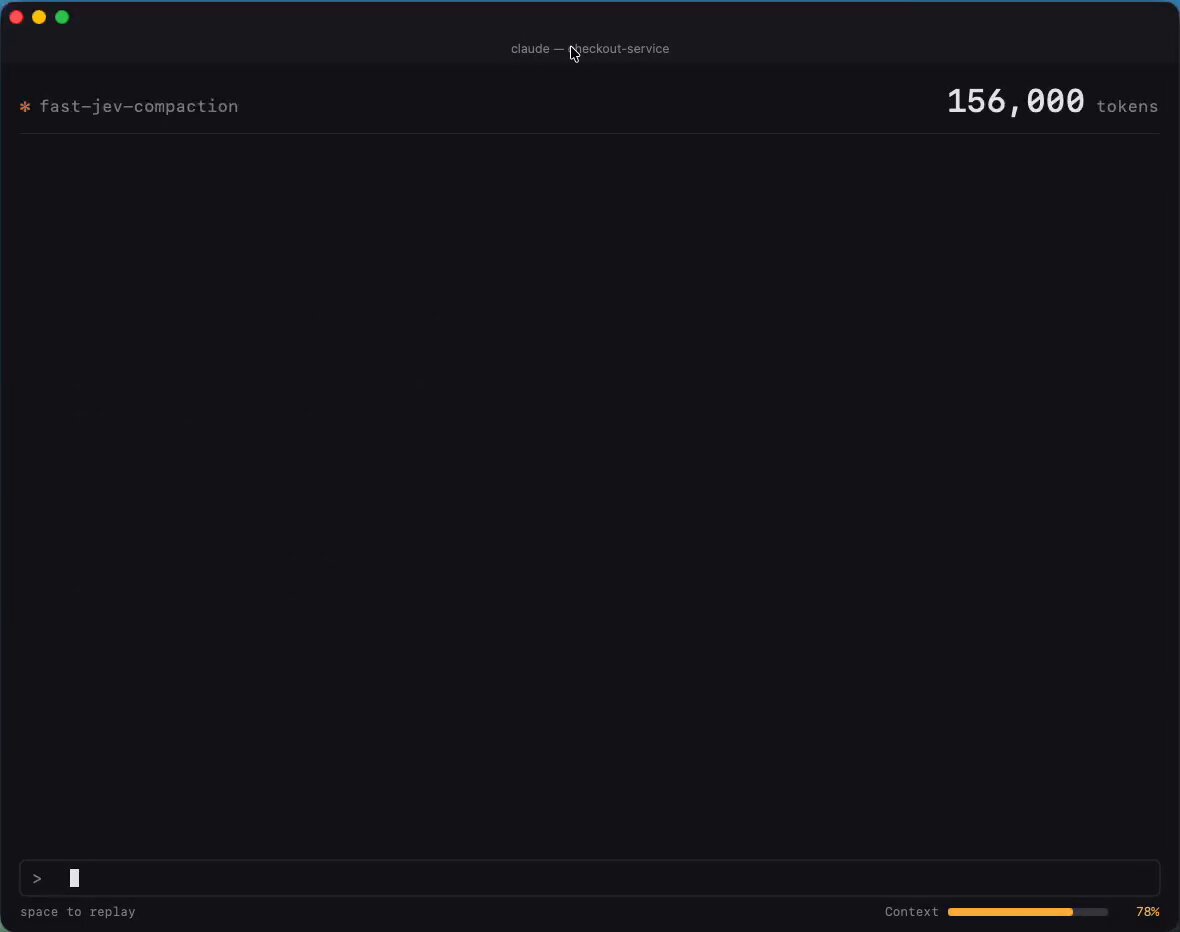 @tamarajtranfound the perfect use case for @typesafeai Jev2.7M
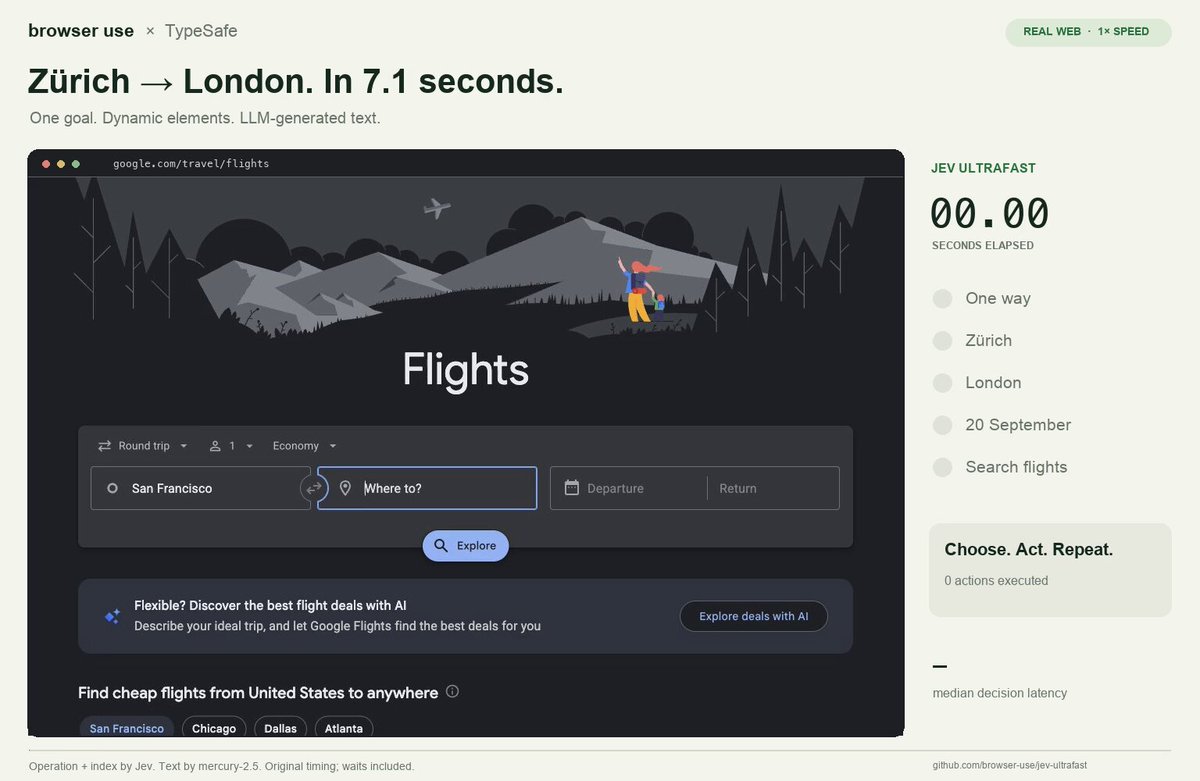 @gregpr07Browser Use + Jev = Ultrafast ⚡2.5M
 @MatijaSosicHere's a 45-second TL;DR on Jev1.4M
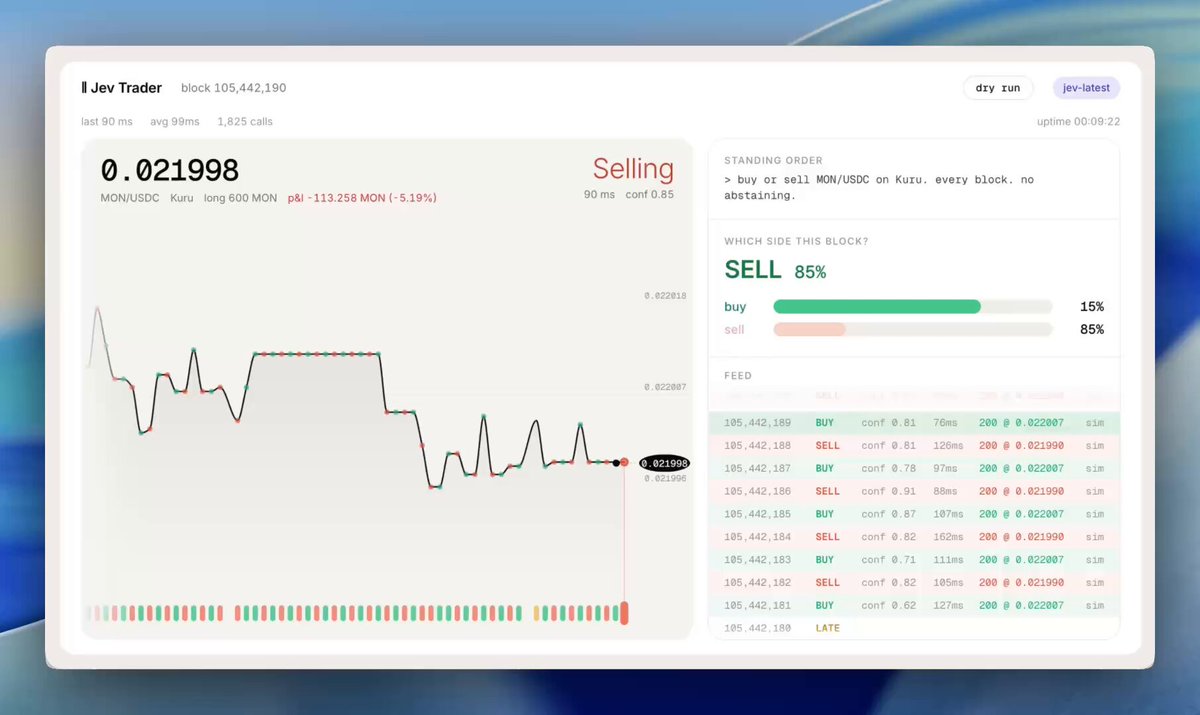 @jarrodwattsI built a trading bot with Jev!1.0M
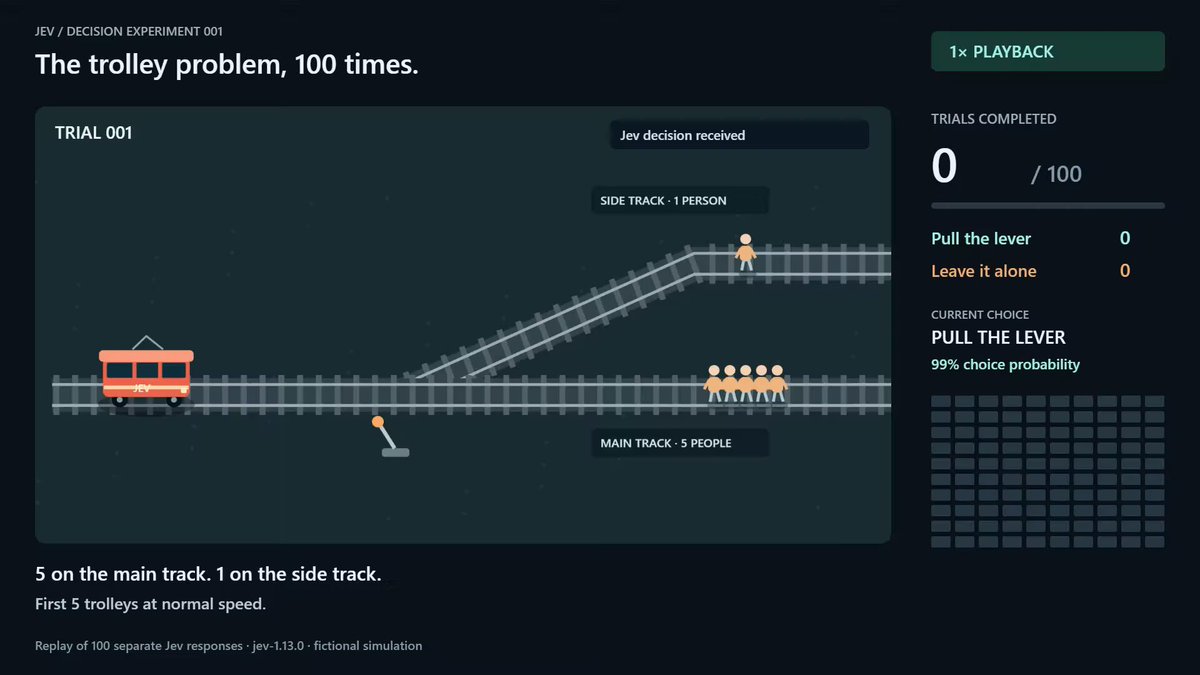 @The_AlexI trust Jev with my life960.8K
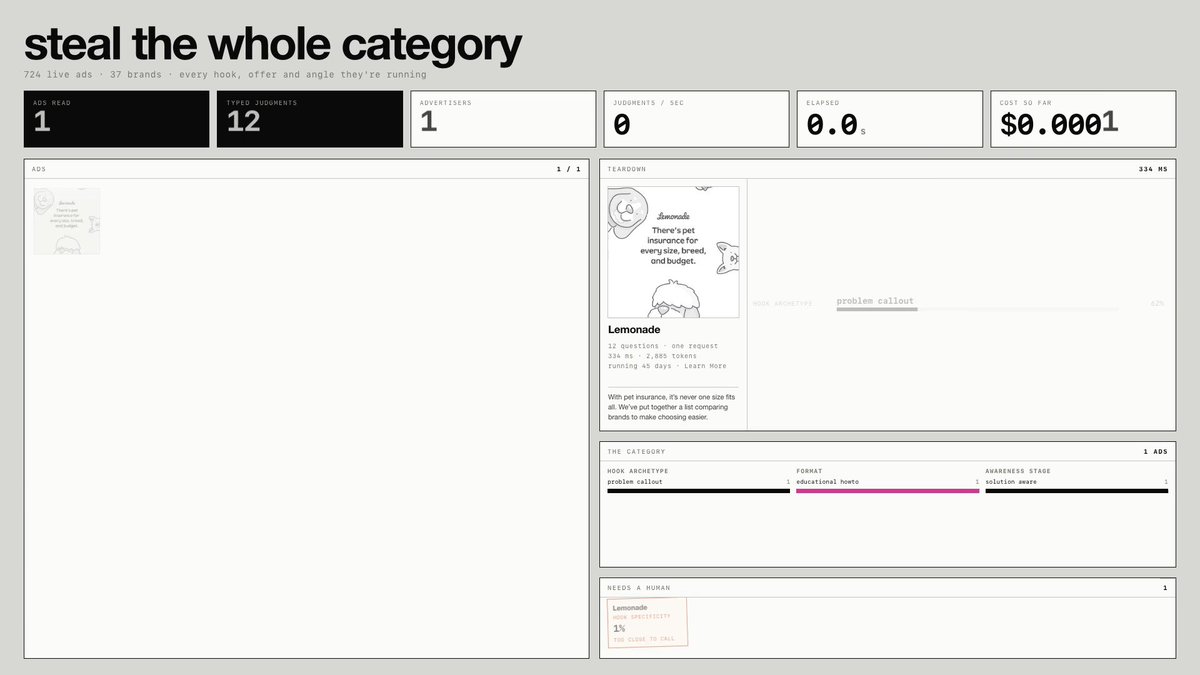 @TheMattBermanjev is INSANE635.3K
START HERE
What is Jev AI
The full explanation: System One models, the three question types, pricing, and the benchmark read honestly.
Jev vs text LLMs
Property by property, with a cost calculator and a plain answer on when Jev is the wrong tool.
Jev decision patterns
Eleven implementation shapes with state, questions and routing policy, ready to copy.
Jev projects
Open-source projects and documented practices that use Jev for a typed decision.
JEV AI INDEX FAQ
- What is this Jev AI site?
- An independent community index of what developers build with Jev AI. It collects public Jev demos from X, open-source Jev projects, and the decision patterns people keep reusing. It is not affiliated with TypeSafe AI.
- Is this the official Jev AI site?
- No. The official Jev AI pages are at typesafe.ai and docs.typesafe.ai. This is a community index, and it says so in the footer of every page.
- Where does the Jev AI case data come from?
- Public posts on X, curated into a structured dataset. Every case links back to the original post and credits its author; video, text and trademarks belong to the people who made them.
- Where does the Jev AI project data come from?
- The community awesome-jev list, which is MIT licensed. A listing there is not an endorsement — entries are not reviewed for code quality, security or maturity, and roughly a quarter of them are write-ups rather than code.
- How often is the Jev AI index updated?
- The current snapshot covers the first four days after the Jev AI release, which is when the bulk of the public demos appeared. The project and pattern data track the upstream community lists.
- Can I get my Jev AI project listed?
- Submit it to the upstream awesome-jev list. This index builds from that list, so anything accepted there shows up here on the next build.